• Jl. RE Martadinata No.17
  • yustisia@tisi.co.id
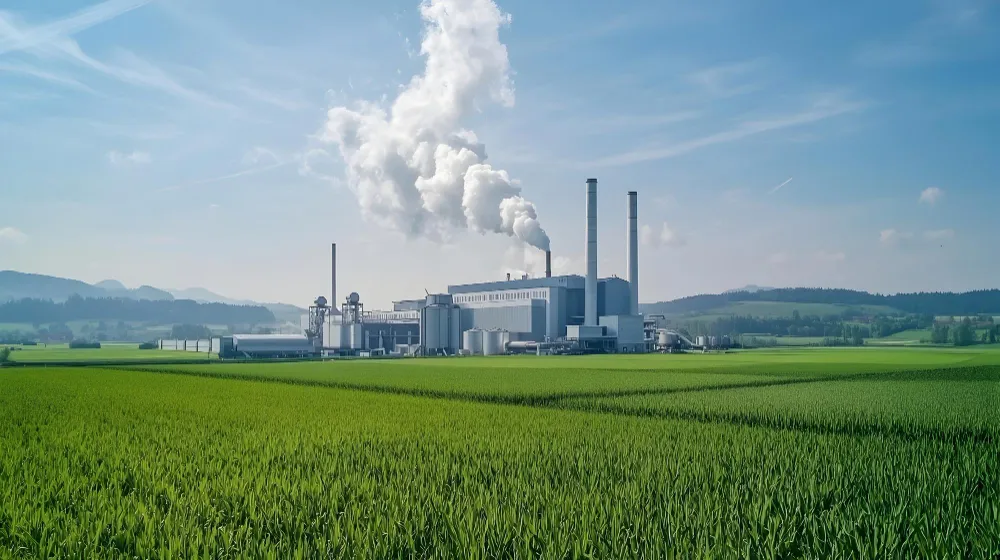
Biomass power plant using PKS and EFB Pellet for co-firing applications
Industrial Renewable Energy

Biomass Power Plant & Co-firing

TISI supplies Palm Kernel Shell and EFB Pellet to support power plants transitioning from conventional coal toward lower-carbon energy generation through full biomass conversion or progressive co-firing strategies.

🌿 Lower Carbon Emissions Supports gradual reduction of fossil-fuel dependence.
Stable Energy Feedstock Industrial biomass supply for continuous operations.
⚙️ Boiler Compatibility Product selection aligned with combustion technology.
🚢 Scalable Supply Coordinated sourcing and export-oriented logistics.
Practical Energy Transition

The Co-firing Challenge Solved

Coal-fired power plants face increasing pressure to reduce emissions while maintaining generation reliability, thermal stability, and asset utilization. Co-firing offers a practical transition pathway by introducing a controlled percentage of biomass into the existing fuel mix.

TISI supports this transition with PKS and EFB Pellet supply solutions designed around product consistency, technical specifications, required volume, boiler compatibility, and scheduled delivery.

Co-firing can help power producers begin reducing coal consumption without immediately replacing the entire generation infrastructure.

Coal Fuel Base Existing thermal generation infrastructure
+
🌴
PKS or EFB Pellet Renewable biomass introduced at a selected ratio
=
CO₂
Lower Fossil-Fuel Use Progressive transition toward cleaner generation
Technical Application

Boiler Compatibility Analysis

Biomass selection should consider boiler technology, fuel feeding, milling requirements, particle characteristics, combustion behavior, and the target co-firing ratio.

🔥

Pulverized Coal Boiler

Often evaluated with EFB Pellet

Pulverized Coal systems typically require fuel that can be handled, ground, and introduced through established milling and feeding arrangements. Densified EFB Pellet may offer practical handling and size-reduction advantages, subject to plant-specific testing.

Greater density than loose EFB material
More manageable transportation and storage
Potentially easier preparation for fine feeding
Indicative Application Progressive low-to-medium co-firing ratios
⚙️

Fluidized Bed Boiler

Highly compatible with Palm Kernel Shell

Fluidized Bed Boilers can accommodate a broader variety of solid fuels and particle sizes. PKS is commonly considered for these systems due to its combustion characteristics, manageable size, and industrial energy potential.

Strong combustion characteristics
Practical handling and fuel-bed performance
Suitable for higher biomass utilization levels
Indicative Application Co-firing through full biomass utilization
Operational Reliability

Mitigation of Technical Risks

Biomass quality can directly influence combustion stability, boiler efficiency, deposit formation, corrosion exposure, and maintenance requirements. TISI coordinates product verification to support more predictable operational performance.

🛡️

Slagging & Fouling Control

Excessive ash and unsuitable mineral composition may contribute to deposits on furnace surfaces and boiler tubes, reducing thermal efficiency and increasing cleaning requirements.

TISI Quality Focus Low ash targets, representative sampling, and laboratory verification based on agreed product specifications.
🔧

Corrosion Control

Sulfur, chlorine, moisture, and combustion conditions can influence corrosion exposure within boilers and heat-exchange components.

TISI Quality Focus Technical parameter assessment, moisture management, and specification alignment before shipment.
🌡️

Stable Thermal Output

Variation in calorific value, moisture, particle size, and foreign material can cause unstable fuel feeding and fluctuating thermal performance.

TISI Quality Focus Product preparation, size management, moisture checking, and consistent supply coordination.
From Sustainable Source to Your Boiler

Coordinated supply for continuous energy generation

Large-scale power applications require more than suitable biomass. They require disciplined sourcing, quality control, consolidation, logistics planning, and dependable delivery.

🌴
STEP 01 Sustainable Mill and Supplier Network
🚚
STEP 02 Collection and Product Consolidation
⚙️
STEP 03 Processing and Preparation
🔍
STEP 04 Inspection and Laboratory Testing
🚢
STEP 05 Bulk or Container Shipment
STEP 06 Powering Cleaner Industrial Energy
Interactive Planning Tool

Co-firing Ratio & Emission Calculator

Enter the plant capacity, estimated operating hours, target co-firing ratio, and selected biomass fuel to generate an initial planning estimate for monthly biomass requirements and potential coal displacement.

Initial commercial and supply-chain planning estimate
Adjustable operating capacity and co-firing ratio
Results can be sent directly to the TISI team

Estimated Monthly Result

Biomass Required 0 metric tons/month
Coal Displaced 0 metric tons/month
Potential CO₂ Reduction 0 metric tons CO₂/month
Equivalent environmental impact estimate will appear here.

This calculator provides an illustrative planning estimate only. Actual biomass consumption and emission reduction depend on boiler efficiency, plant heat rate, fuel calorific value, operating hours, moisture, coal characteristics, combustion technology, auxiliary consumption, and project-specific engineering assumptions.

Build a More Reliable Biomass Fuel Strategy with TISI

Discuss your plant capacity, boiler technology, target co-firing ratio, required specifications, monthly fuel volume, destination, and long-term supply requirements with our trading team.