Material Preparation
Palm empty fruit bunches are collected and separated from unsuitable materials before entering the production process.
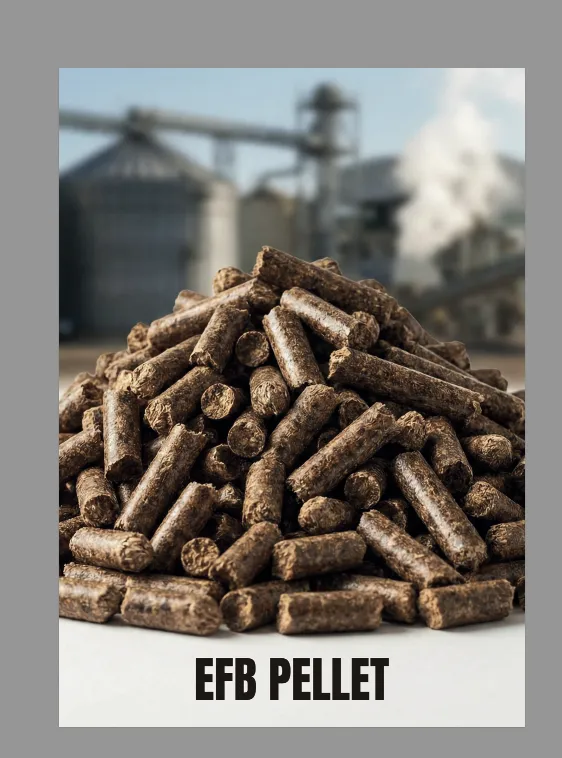 Empty Fruit Bunch (EFB) pellets are a highly efficient and renewable biomass fuel derived entirely from the solid waste of the palm oil industry. Serving as a sustainable alternative to conventional fossil fuels, these pellets repurpose the discarded bunches that remain after the palm oil extraction process. By converting this abundant agricultural byproduct into a high-value energy source, EFB pellets play a crucial role in reducing industrial waste and supporting eco-friendly, circular economy initiatives worldwide.
The production of these pellets involves a systematic and meticulous processing method to transform the raw EFB fibers into a dense, highly combustible material. Initially, the bulky bunches go through a rigorous crushing stage, followed by an extensive drying process to significantly reduce their moisture content to optimal levels.
After drying, the material is shredded into finer fibers and finally pressed under high pressure to mold them into uniform, solid pellets. This comprehensive process ensures that the final product has a high energy density, making it incredibly efficient for storage, transportation, and industrial combustion.
Beyond their environmental advantages, EFB pellets offer significant technical and economic benefits for large-scale energy generation. Due to their high density and low moisture content, they possess a robust calorific value, providing an efficient and consistent heat output comparable to traditional coal but with drastically lower sulfur and greenhouse gas emissions. Furthermore, their compact and uniform shape significantly optimizes supply chain logistics, allowing for highly cost-effective storage, bulk handling, and international export, making them a strategically valuable commodity for global industries transitioning toward sustainable power solutions.
A densified renewable biomass fuel produced from processed palm empty fruit bunches, engineered for practical handling, efficient combustion, and dependable industrial energy applications.
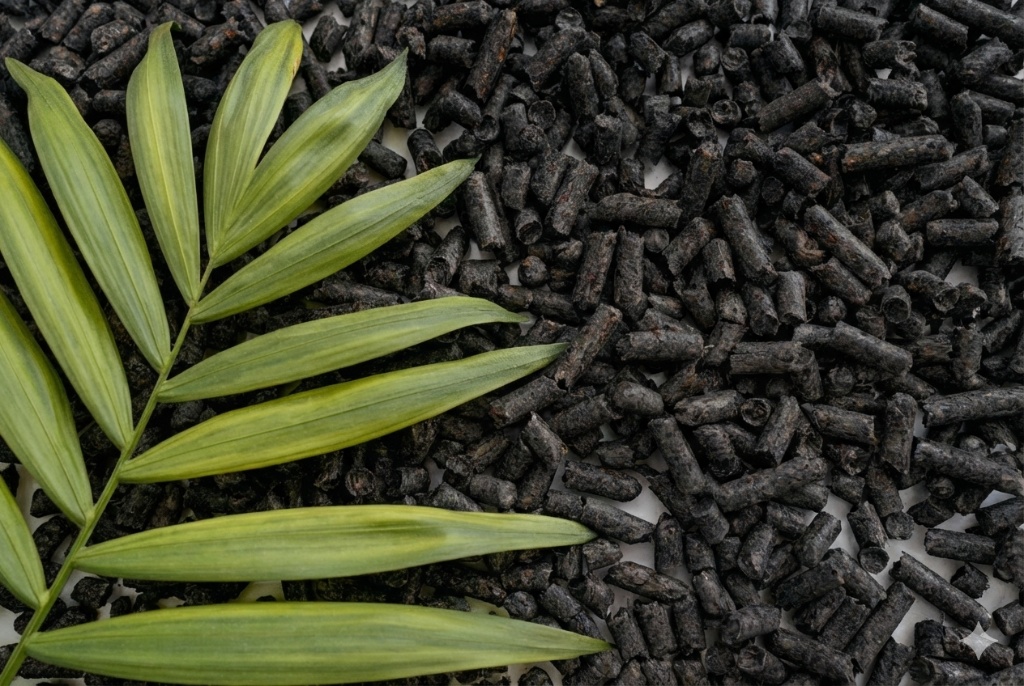

Empty Fruit Bunch, commonly referred to as EFB, is a fibrous biomass material generated during the processing of fresh fruit bunches in palm oil mills. Through controlled preparation and densification, this renewable material can be transformed into a more practical industrial fuel.
EFB Pellet is produced by shredding the empty fruit bunch material, reducing excess moisture through drying, refining the material, and compressing it into a dense pellet form. This production process improves handling, storage, feeding, and transportation compared with untreated loose biomass.
The resulting pellet can be used in appropriately configured industrial energy systems that require renewable solid fuel with manageable physical characteristics and efficient combustion performance.
EFB Pellet creates additional value from palm-processing residue by converting it into a densified biomass fuel suitable for domestic industrial use and international energy markets.
EFB Pellet production involves a structured sequence designed to improve the material’s physical consistency, handling efficiency, and suitability as an industrial biomass fuel.
Palm empty fruit bunches are collected and separated from unsuitable materials before entering the production process.
The fibrous EFB material is shredded into a smaller and more manageable form to support further processing.
Excess moisture is reduced to improve combustion readiness, storage stability, and pellet formation.
Prepared material is compressed into a densified pellet form for easier handling, controlled feeding, and efficient transportation.
EFB Pellet can support a range of thermal-energy applications, subject to combustion-system design, fuel-preparation requirements, and the operating parameters of each facility.
Suitable for appropriately configured boiler systems used to generate process heat and steam across manufacturing operations.
A renewable solid-fuel option for steam-production facilities supporting processing, heating, and industrial utility demand.
Can be utilized by biomass-energy facilities designed to convert renewable solid fuel into thermal energy and electricity.
Its densified format supports efficient storage, commercial handling, and international shipment to overseas biomass markets.
The transformation of loose EFB fiber into pellet form creates several operational advantages for industrial users and biomass fuel buyers.
EFB Pellet offers a renewable biomass alternative for facilities seeking to reduce reliance on conventional fossil-based fuels.
Pelletized EFB can be crushed or ground where finer fuel preparation is required before feeding into a combustion system.
A more consistent physical format can support controlled conveying, feeding, and combustion compared with untreated loose EFB fiber.
Densification reduces the volume of loose fibrous biomass, helping improve storage utilization and commercial transportation efficiency.
Every industrial facility has different requirements for fuel size, moisture condition, combustion preparation, delivery schedule, shipment volume, and handling method. TISI coordinates product supply according to the buyer’s agreed commercial and technical parameters.
Share your intended application, required volume, destination port, delivery schedule, preferred packaging, and commercial terms. The TISI team will help evaluate an appropriate supply solution for your business.