• Jl. RE Martadinata No.17
  • yustisia@tisi.co.id
Controlled Storage

Warehouse and Stockpile Management

Proper storage is a critical part of biomass quality management. TISI coordinates warehouse and stockpile practices designed to protect product condition, maintain stock visibility, reduce contamination risks, and prepare cargo efficiently for scheduled inspection and loading.
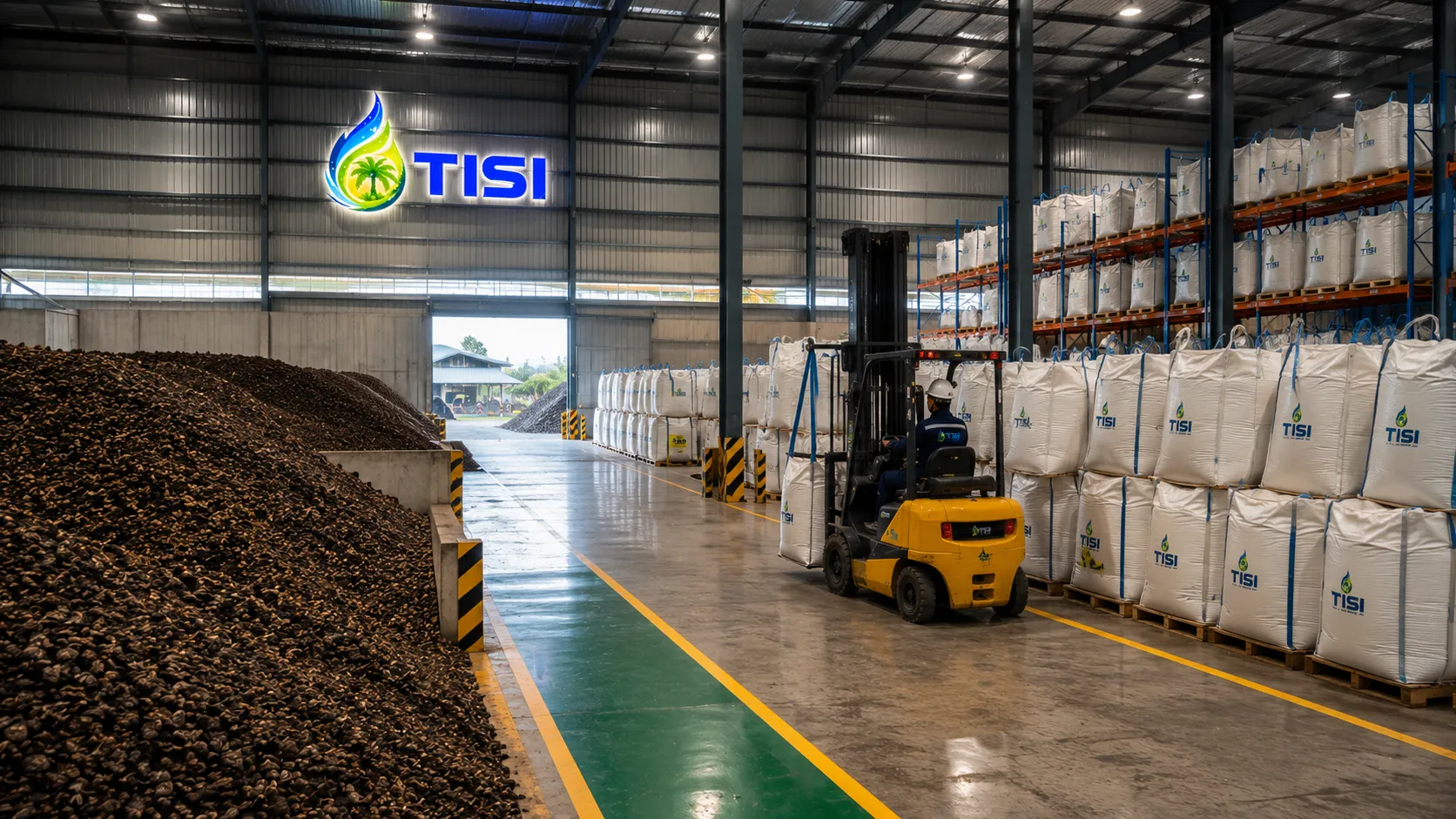
Palm biomass warehouse and managed stockpile prepared for inspection and export loading
Storage Objective Product Protection and Shipment Readiness

Structured stock management helps preserve cargo consistency from warehouse intake through loading.

Storage Quality Control

Protecting biomass quality before it reaches the customer.

Biomass storage requires more than available space. Stock must be organized according to product type, source, quality status, and shipment plan. Environmental exposure, moisture, foreign material, and uncontrolled stock movement may affect product performance and buyer acceptance.

Organized Stock Zones
Moisture Risk Management
Inventory Visibility
Loading Readiness
01

Stock Segregation

Products may be separated according to biomass type, supplier source, quality condition, inspection status, or designated customer order to reduce unintended mixing.

02

Moisture Protection

Storage conditions are coordinated to limit unnecessary exposure to rain, surface water, and excessive humidity that could increase moisture content or reduce handling efficiency.

03

FIFO Stock Rotation

First-In, First-Out practices help manage product movement in a logical sequence, reduce extended storage periods, and improve inventory traceability.

04

Contamination Prevention

Storage areas are monitored for dirt, stones, metal, mixed materials, and other foreign substances that could affect cargo cleanliness or buyer specifications.

05

Volume Monitoring

Available stock, incoming product, allocated cargo, and loading requirements are monitored to support shipment planning and supply availability communication.

06

Loading Preparation

Cargo is organized for sampling, inspection, weighing, equipment access, loading schedules, and transfer to trucks, containers, or other shipment arrangements.

Storage Management Flow

From warehouse intake to shipment preparation

A structured storage sequence helps protect product condition while ensuring that inspected and allocated cargo can be prepared efficiently for loading.

STEP 01 Product Intake and Source Identification
STEP 02 Segregated Storage and Protection
STEP 03 Volume Monitoring and Quality Access
STEP 04 Inspection and Loading Preparation
i
Storage arrangements may vary depending on product type, warehouse infrastructure, weather conditions, cargo volume, buyer specifications, and the selected shipment method.
Product Preparation

Processing and Preparation

Palm biomass is prepared through a series of controlled steps designed to improve product suitability, consistency, and readiness for storage, loading, and industrial use.

Flexible Processing Approach

Preparation tailored to product type and buyer requirements.

TISI coordinates product preparation based on the characteristics of each biomass material and the technical requirements of the customer. Palm Kernel Shell, Palm Fiber, and EFB-derived products may require different preparation methods depending on moisture, particle size, cleanliness, storage conditions, and intended industrial application.

Processing steps may vary according to product type, source condition, destination market, loading method, and buyer specification.

01

Screening

Biomass material may be screened to separate oversized particles, undersized fractions, and unwanted materials before further preparation.

02

Cleaning

Cleaning helps reduce dirt, dust, stones, and other contaminants that may affect product quality, combustion performance, or buyer acceptance.

03

Drying When Required

Drying may be conducted when moisture reduction is needed to support storage stability, handling efficiency, or customer specifications.

04

Size Control

Particle size may be managed to improve product uniformity, compatibility with feeding systems, and overall combustion performance.

05

Foreign Material Removal

Unwanted materials are identified and removed to support cleaner cargo, safer handling, and better alignment with agreed quality parameters.

06

Storage Preparation

Prepared products are organized for stock segregation, moisture protection, inspection access, volume management, and scheduled loading.

Product-Specific Preparation methods are adjusted to the characteristics of each biomass product.
Buyer-Oriented Processing is aligned with agreed technical specifications and operational needs.
Quality-Focused Each preparation stage supports more consistent handling, storage, and shipment readiness.
Quality Control System

Quality Assurance Checkpoint

Quality assurance is a critical checkpoint within the TISI supply chain. Product condition, representative samples, technical parameters, cargo quantity, and supporting documentation may be verified before loading and shipment.

Before Shipment

Verifying product condition before cargo release.

TISI coordinates quality-control activities according to the product, contractual specification, buyer requirements, inspection arrangement, and destination market. The objective is to identify potential issues before cargo loading and provide clearer quality information to all parties.

Representative product verification
Technical parameter assessment
Cargo quantity and loading readiness
Inspection documentation support
Inspection Sequence

Eight coordinated quality checkpoints

The sequence and scope may be adjusted based on the agreed product specification and inspection plan.

01 Visual Inspection
02 Sampling
03 Moisture Test
04 Ash Test
05 Foreign Material
06 Weight Verification
07 Laboratory Analysis
08 Third-Party Inspection
01

Visual Inspection

Product appearance, general cleanliness, particle condition, moisture indicators, stockpile condition, and visible foreign materials are reviewed before further testing.

02

Representative Sampling

Samples may be collected from multiple points or product portions to create a more representative basis for testing and quality verification.

03

Moisture Testing

Moisture content is checked because it can affect cargo weight, storage stability, combustion performance, handling efficiency, and contractual acceptance.

04

Ash Testing

Ash content may be assessed to evaluate the non-combustible residue expected after combustion and to compare product condition with the agreed specification.

05

Foreign Material Checking

Stones, soil, metal, plastics, mixed biomass, and other unwanted substances may be identified to support cleaner cargo and safer industrial use.

06

Weight Verification

Cargo quantity may be confirmed through weighbridge records, container weighing, loading records, or other agreed weight verification methods.

07

Laboratory Analysis

Additional analysis may be conducted for calorific value, sulfur, ash, moisture, or other technical parameters required by the buyer or transaction.

08

Third-Party Inspection

Independent inspection companies may be appointed when requested to provide additional verification, sampling, testing, or loading supervision.

i

Inspection scope and available documentation may vary according to product type, supplier location, contractual terms, laboratory access, buyer specification, destination market, and third-party inspection arrangements.

Technical Product Information

Request a Typical Biomass Specification

Contact TISI to request available typical specifications and discuss your required product, moisture level, ash content, calorific value, particle size, monthly volume, destination port, and preferred inspection arrangement.

Request Typical Specification