
• Jl. RE Martadinata No.17
  • yustisia@tisi.co.id
Industrial Biomass Solutions for Cement Manufacturing

High-Performance Biomass for Cement Kiln Operations

Palm Kernel Shell provides cement manufacturers with a practical alternative to conventional fossil fuel. Its strong thermal characteristics, flexible substitution potential, and renewable origin support stable kiln operations while advancing operational efficiency and carbon-reduction objectives.

±4,000–4,500 Typical PKS calorific value range in kcal/kg, subject to specification and moisture condition.
>1,400°C High-temperature clinker production requires reliable and carefully controlled thermal input.
Coal Substitution A practical pathway toward fuel diversification and lower fossil carbon dependency.
Cement Industry Application

A Thermal-Intensive Industry Requires More Than a Low-Cost Fuel

Cement production depends on a continuous and highly controlled heat supply. Inside the rotary kiln, raw materials must undergo complex thermal reactions before they are transformed into clinker, the essential intermediate product used in cement manufacturing.

The challenge is not simply to find an alternative fuel with a lower purchase price. Cement producers must also consider thermal stability, fuel handling, combustion behaviour, contaminants, supply continuity, and the effect of the fuel on final product quality.

TISI’s role extends beyond commodity trading. We help coordinate biomass specifications, quality assurance, supply readiness, documentation, logistics, and communication to support responsible fuel-substitution programmes.
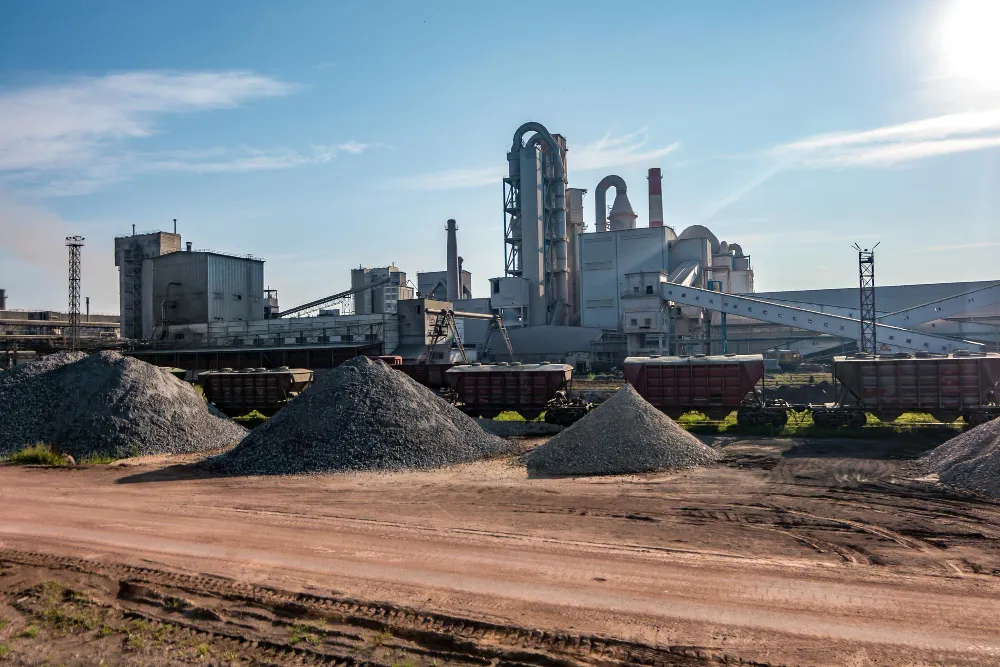
Cement plant rotary kiln and industrial thermal operation
Stable Heat. Controlled Quality. Biomass substitution must be aligned with kiln design, feeding system, fuel specification, and operational targets.
Core Value Proposition

Palm Kernel Shell for Efficient Cement Kiln Fuel Substitution

TISI focuses on three operational priorities that directly influence the reliability of biomass use in cement manufacturing: thermal performance, commercial efficiency, and strict foreign-material control.

01

High-Thermal Efficiency for Kiln Operations

Palm Kernel Shell is widely considered a suitable biomass fuel for industrial thermal applications because it combines relatively high energy density with practical handling characteristics. Typical calorific values may reach approximately 4,000–4,500 kcal/kg, depending on moisture content, processing condition, and agreed specification.

  • Supports partial substitution of conventional coal
  • Suitable for high-temperature industrial combustion
  • Provides measurable energy contribution per unit of fuel
  • Can be integrated into structured co-processing programmes
02

Cost-Effectiveness and Carbon Optimization

Biomass can support fuel-cost diversification by reducing exclusive dependence on commercial coal. The economic benefit must be evaluated through delivered cost, moisture, net calorific value, handling requirements, substitution ratio, and local logistics—not purchase price alone.

  • Potentially competitive delivered energy cost
  • Lower exposure to a single fossil-fuel source
  • Supports corporate carbon-reduction roadmaps
  • May strengthen readiness for carbon-related incentives
03

Strict Foreign-Material Control

Stones, metal fragments, excessive soil, and other contaminants can damage conveying equipment, interrupt feeding consistency, and introduce operational risk. TISI therefore emphasizes inspection, screening, segregation, and loading supervision before shipment.

  • Visual inspection and stockpile monitoring
  • Screening for stones and oversized contaminants
  • Metal and foreign-material risk control
  • Supervised loading and shipment preparation
Thermal Performance

Designed to Support Stable Combustion in Rotary Kilns

Clinker formation requires a highly controlled thermal environment. An alternative fuel must therefore be evaluated not only by its nominal calorific value, but also by moisture, particle size, feeding consistency, ash behaviour, combustion profile, and the plant’s existing fuel-injection system.

PKS can function as a complementary thermal fuel when the substitution programme is developed through controlled trials, stable specifications, and close coordination between the supplier and the cement plant’s technical team.

Request a Technical Discussion
4,000–4,500
Typical Gross Calorific Value Approximate kcal/kg range. Actual values depend on moisture, origin, testing method, and contractual specification.
Controlled
Fuel Feeding Consistency Size distribution and foreign-material control influence conveyor, dosing, and combustion performance.
Flexible
Substitution Strategy PKS can be introduced gradually based on kiln configuration, operating conditions, and plant-specific trial results.
Renewable
Biogenic Energy Source Palm-derived biomass can support reduced reliance on fossil energy within a documented sustainability framework.

Technical performance varies by biomass source, kiln technology, fuel preparation, moisture condition, feeding system, process control, and the agreed product specification.

Quality inspection and biomass handling for cement industry
QA
Foreign Material Risk Control Inspection, screening, segregation, sampling, and supervised loading before dispatch.
TISI Quality Assurance

Protecting Kiln Reliability Through Strict Material Control

The quality of biomass fuel is determined by more than calorific value. Uncontrolled contaminants can affect conveying equipment, feeding consistency, combustion behaviour, ash balance, and operational continuity. TISI applies structured checkpoints to reduce these risks before delivery.

01
Source and Stockpile Inspection

Biomass condition, storage practices, contamination risk, and visible material consistency are reviewed before loading.

02
Screening and Foreign-Material Removal

Stones, metal fragments, soil accumulation, and oversized material are identified and controlled where applicable.

03
Sampling and Parameter Verification

Moisture, ash, calorific value, size distribution, and other parameters can be checked based on buyer requirements.

04
Loading and Shipment Supervision

Material handling, quantity, cleanliness, documentation, and shipment readiness are coordinated before dispatch.

Interactive Fuel Comparison

Fuel Substitution Matrix

Compare key characteristics of sub-bituminous coal and Palm Kernel Shell. Select a category to emphasize the parameters most relevant to thermal performance, operations, cost, or sustainability.

Highlight comparison category:
Comparison Parameter Sub-Bituminous Coal Palm Kernel Shell from TISI
Typical Calorific Value Generally high and relatively stable, depending on coal grade and moisture. Approximately 4,000–4,500 kcal/kg, subject to moisture, origin, testing method, and agreed specification.
Combustion Application Established primary fuel for conventional cement kiln systems. Suitable as a complementary alternative fuel under a controlled substitution programme.
Fuel Consistency Generally standardized through coal grading and preparation. Requires control of moisture, size distribution, contaminants, and source consistency.
Foreign-Material Risk Possible contamination from mining, transport, and stockpile handling. Managed through visual inspection, screening, segregation, sampling, and supervised loading.
Handling and Feeding Existing plant infrastructure is typically designed around coal. May require adjustment to storage, feeding, blending, and dosing systems depending on plant configuration.
Cost Evaluation Influenced by coal grade, global market price, freight, and energy content. Evaluated through delivered price, net calorific value, moisture, handling cost, and substitution performance.
Supply Strategy Supported by mature domestic and international coal markets. Requires qualified supplier networks, volume planning, stockpile management, and logistics coordination.
Carbon Profile Fossil fuel with direct fossil carbon emissions. Palm-derived biomass contains biogenic carbon and may support fossil-fuel reduction targets when responsibly sourced.
Carbon-Reduction Potential Limited without efficiency improvements or carbon-capture measures. Can contribute to a documented fuel-substitution and emissions reduction programme.
Sustainability Positioning Conventional fossil energy source. Supports circular use of palm-industry residue when traceability and responsible sourcing controls are applied.

This matrix is intended as a general commercial and technical overview. Actual performance, delivered cost, emissions impact, and substitution ratio must be evaluated using plant-specific operating data, laboratory analysis, logistics conditions, and controlled combustion trials.

Commercial and Environmental Value

Competitive Energy Must Be Evaluated on a Total-Cost Basis

Effective biomass procurement requires a balanced review of fuel performance, landed cost, plant compatibility, operational impact, carbon objectives, and supply continuity.

Operational Cost Optimization

PKS can improve fuel-sourcing flexibility and reduce dependence on a single conventional energy source. The strongest commercial case is built by comparing cost per useful thermal unit rather than cost per tonne alone.

Delivered fuel price and inland transportation cost
Net energy contribution after moisture adjustment
Storage, preparation, handling, and feeding requirements
Achievable substitution ratio and operational stability

Carbon Credit and Reduction Readiness

Replacing a portion of fossil coal with responsibly sourced biomass may help cement manufacturers demonstrate measurable progress toward emissions-reduction targets. Any carbon-credit, tax, or incentive benefit remains subject to applicable regulations, approved methodologies, traceability, and verified emissions data.

Documented fossil-fuel substitution
Biomass sourcing and delivery traceability
Laboratory data and shipment documentation
Alignment with applicable reporting frameworks
Start a Technical and Commercial Review

Evaluate PKS for Your Cement Kiln Fuel Strategy

Share your target volume, required calorific value, moisture limit, delivery location, shipment method, and preferred commercial term. TISI will review the requirement and coordinate the next stage of specification, sourcing, quality assurance, and logistics planning.

WA Discuss with TISI